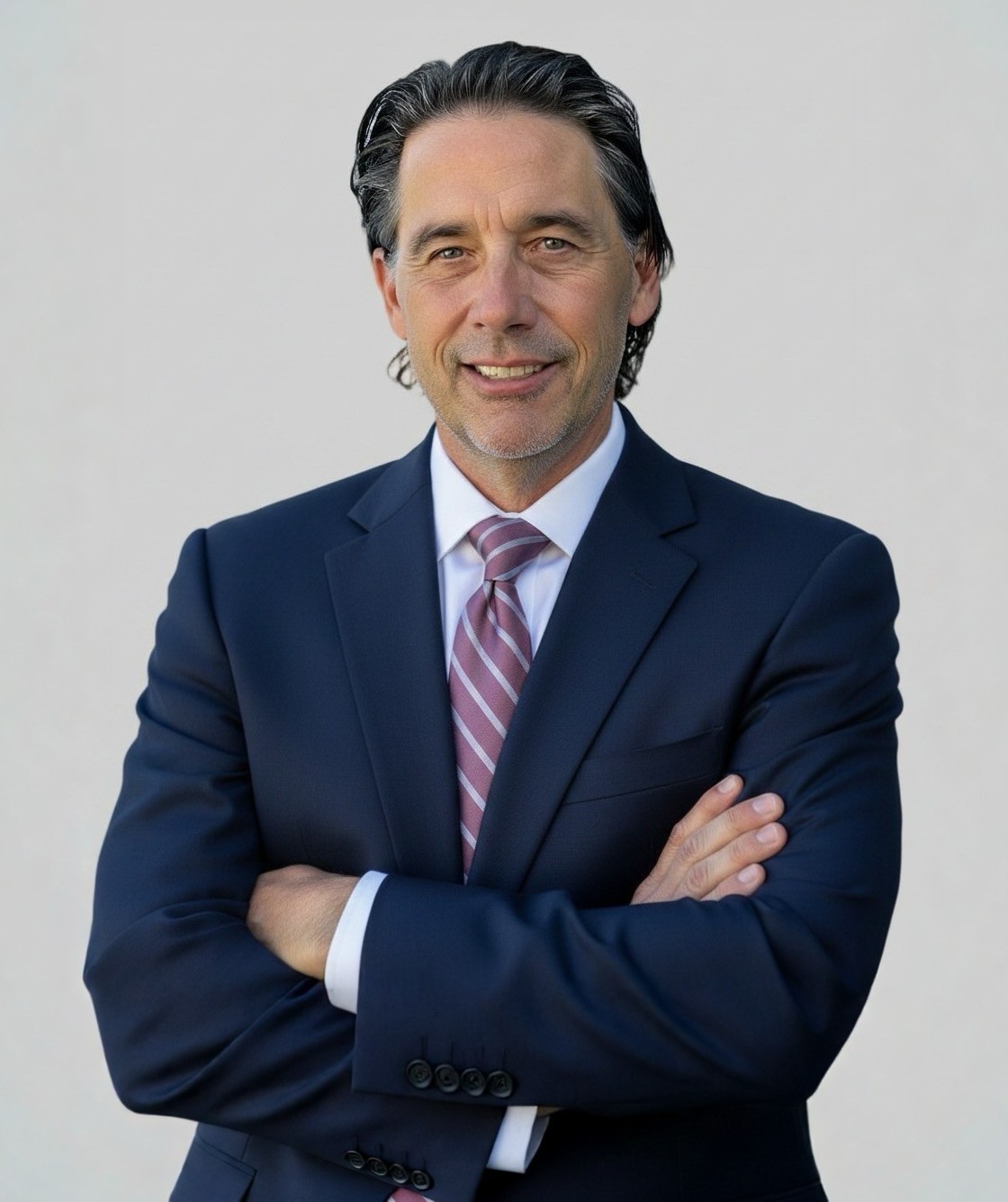
Ada County Courthouse in Boise, where state charges from Meridian are heard; federal cases go to the U.S. District Court in Boise

Meridian Federal Crimes Defense Attorneys

Charged with a Federal Crime in Meridian, Idaho?

Visit our office in downtown Boise, near the Ada County Courthouse

Federal charges against a Meridian resident are prosecuted by the U.S. Attorney for the District of Idaho and heard at the U.S. District Court in Boise, under rules, a timeline, and a sentencing framework that have nothing to do with the Ada County Courthouse. Randall Barnum is admitted there and serves on the Criminal Justice Act panel.

5.0 Google Reviews
→ Talk to An Attorney Today Schedule Your Free Consultation
Idaho Defense Firm

Experience That Delivers Results

Past results do not guarantee future outcomes. Every case is unique.

Martindale-Hubbell Client Champion - Reviewed Martindale-Hubbell Notable - Peer Rated for Strong Ethical Standards 2026

"Randy was able to get my case dismissed."

– Derek L.

Rape

Reduced to Misdemeanor

Aggravated Battery

Acquittal

Felony Domestic Violence

Acquittal

Possession of Stolen Firearm

Acquittal

County Case or Federal Case: What It Means for Someone in Meridian

An arrest in Meridian ordinarily becomes an Ada County case. Local police, the Ada County Sheriff’s Office, or Idaho State Police make the arrest, booking is at the Ada County Jail on Barrister Drive, the Ada County Prosecuting Attorney files the charge, and the hearings are at the Ada County Courthouse, 200 W Front Street in Boise, in Idaho’s Fourth Judicial District. A federal case takes a different road to the same city. The U.S. Attorney for the District of Idaho prosecutes it, and it is heard at the U.S. District Court for the District of Idaho, which sits in Boise. Two courthouses in the same city, and almost nothing in common between them except the address line.

A federal case follows its own rules on its own timeline. The investigating agencies are federal. Charging, the detention decision, discovery, and motion practice follow federal rules that bear little resemblance to a morning in an Ada County magistrate’s courtroom. Sentencing is shaped by the federal sentencing guidelines, which are advisory: the judge must calculate the range and consider it, but the sentence is the judge’s decision under the statute, and the defense argues for where it should land. Someone who has been through a county case will recognize very little of the federal process.

Randall Barnum is admitted to both federal courts that matter here, the U.S. District Court for the District of Idaho and the U.S. Court of Appeals for the Ninth Circuit, and he sits on the Idaho Criminal Justice Act Panel, the list of private attorneys the federal court appoints for people who cannot afford counsel. The firm also practices at the Ada County Courthouse, where Shawn Wilkerson carried a felony caseload as an Ada County Public Defender from 2019 to 2025. That combination matters when one set of facts has produced both a county charge and federal interest, because the two cases do not wait for each other.

If an agent has contacted you, the investigation is already underway. Call (208) 336-3600 before you answer a single question.

By the Time You Hear About It, the Government Has Already Been Working.

Federal cases are assembled before the arrest, and the first contact may be an agent asking for a conversation. What you say in that conversation becomes the government’s evidence. The window before charges are filed is when a defense attorney has the most room to work, and a statement given without counsel can close it. Call and talk directly with an attorney who is admitted to the U.S. District Court for the District of Idaho.

How a Federal Case Against a Meridian Resident Unfolds

A scenario to work from. Consider a scenario that comes up often. Someone in Meridian is arrested on a drug charge, booked at the Ada County Jail, charged by the Ada County Prosecuting Attorney, and released on bond with a hearing date at 200 W Front Street. Weeks go by. Then federal agents ask to speak with the person about the same facts, and the U.S. Attorney for the District of Idaho files federal charges on the same facts. The rest of this section follows that case.

The investigation is the first phase, not the arrest. In that scenario, the federal interest did not begin the day the agents asked to talk. Federal cases are built before anyone is charged, and the request for a conversation is a sign that the government has been working on the person’s facts for some time, alongside the county case. The response: no statement, nothing destroyed or altered, and a call to a lawyer admitted to the federal court before anything else.

The initial appearance in the U.S. District Court. When the federal charge is filed in that scenario, the person appears before a federal judge in Boise, where the charges are read and the question of release or detention is decided under federal rules. The standards and the hearing are not the same as the bond hearing the person already had at 200 W Front Street, and the defense has to arrive with the facts about the person’s ties, history, and the conditions that would make release workable.

Discovery and motions. Discovery in that federal case follows its own rules on what the government has to produce and by when. The defense reviews agent reports, recordings, the county arrest reports, and the statements of cooperating witnesses, and files motions to suppress evidence or dismiss counts where the law and the facts support it. This phase runs on the federal court’s schedule, not the county’s, and it is where the shape of the case is decided.

Resolution and sentencing. That federal case ends by dismissal, by a negotiated plea, or by trial before a jury in Boise. If it reaches sentencing, the guideline range is calculated from the offense and the person’s history. The defense contests the calculation where it is wrong and argues for a sentence below the range where the facts justify it. Because the guidelines are advisory, that argument is real.

Appeal, and the state case next door. Appeals from a federal conviction or sentence go to the U.S. Court of Appeals for the Ninth Circuit, and Mr. Barnum is admitted there. An appeal can raise only the issues preserved below, which is one more reason the District Court work has to be done right. For the person in that scenario, the Ada County case is still pending while the federal one is, and the two have to be managed together. If you live in Meridian, Eagle, Kuna, Star, or Garden City and believe you are the subject of a federal investigation, or you have been charged, call (208) 336-3600. If you also have an Ada County case pending, our Meridian criminal defense page covers how that side moves through the county courthouse. Your case will not look like this one in its details. It will in its sequence.

Talk to an Attorney Admitted to the Federal Court in Boise.

Free, confidential consultation with a senior attorney. Randall Barnum is admitted to the U.S. District Court for the District of Idaho and the Ninth Circuit.

Reasons to Choose Idaho Defense Firm

Serious Defense. Real Experience.

1

Appointed by the Federal Court to Defend Federal Cases

Randall Barnum is a member of the Idaho Criminal Justice Act Panel, the roster of private attorneys the U.S. District Court for the District of Idaho appoints when a person charged federally cannot afford a lawyer. That appointment is to the same court where a Meridian federal case is heard.

2

Two Courthouses in Boise, and We Practice in Both

A state charge from Meridian goes to the Ada County Courthouse. A federal charge goes to the U.S. District Court. Both are in Boise, and they are not the same system. When one set of facts draws interest from both, we can tell you which court you are in and what that changes.

3

State and Federal Court Experience

Mr. Barnum’s admissions: the Courts of Idaho, the U.S. District Court for the District of Idaho, and the U.S. Court of Appeals for the Ninth Circuit. Shawn Wilkerson carried a felony caseload at the Ada County Courthouse as a public defender from 2019 to 2025. Over 40 years combined.

4

Direct Access to the Attorney Defending You

Your case is handled by a senior attorney. No hand-offs, no revolving door of associates. You get direct access to the attorney defending you, and your questions get answered.

Facing federal charges in Meridian? Get answers now.

Meridian Federal Crimes Questions, Answered

I live in Meridian. What makes a charge federal instead of state?

Who brings it and under what law. A state charge is filed by the Ada County Prosecuting Attorney under Idaho statutes and heard at the Ada County Courthouse at 200 W Front Street in Boise. A federal charge comes from the U.S. Attorney for the District of Idaho, under federal statutes, and is heard at the U.S. District Court for the District of Idaho in Boise. Different judges, different prosecutors, different rules of procedure, and a different sentencing framework. Where you live does not decide it. The charging decision does.

Can the same conduct be charged in both state and federal court?

It can, because some conduct violates both Idaho law and federal law. One example: a person with a felony conviction who possesses a firearm violates Idaho Code 18-3316 and, separately, 18 U.S.C. 922(g). Drug cases can also draw interest from both. Which office files, and whether a case that begins with an Ada County arrest is picked up by the U.S. Attorney, is a decision made by prosecutors. If you have a pending Ada County case and federal agents have asked about it, tell your attorney immediately.

Are the federal sentencing guidelines mandatory?

No. They are advisory. The judge calculates the guideline range and has to consider it, but the sentence is the judge’s decision under the federal statute that applies, and the defense can argue for a sentence below the range. In practice that means the work done before sentencing, on the facts, on the guideline calculation, and on who the person being sentenced actually is, matters as much as anything earlier in the case.

What is the CJA panel, and why does it matter if I am hiring a lawyer?

The Criminal Justice Act panel is the list of private attorneys the U.S. District Court appoints to represent people charged federally who cannot afford counsel. Randall Barnum is on the Idaho panel. For a client who hires the firm, the relevance is practical. The attorney defending your federal case is one the federal court itself has placed on its appointment roster, and who is admitted to the court where the case will be heard.

Agents came to my work in Meridian and asked to talk. Do I have to?

No. Decline politely, ask for a card, and call a lawyer admitted to the federal court. An agent’s visit means an investigation is already open, and your statement is being collected to compare against documents and other witnesses. People who talk because they have nothing to hide hand over the timeline the government did not yet have. If there is a reason to speak with the agents, it should happen with counsel present, after we know what the investigation is about. Do not destroy or alter anything.

Will my federal case be heard at the Ada County Courthouse?

No. It will be heard at the U.S. District Court for the District of Idaho, which sits in Boise, no matter where in Ada County the conduct is alleged to have happened. The District of Idaho covers the whole state. From there, an appeal goes to the U.S. Court of Appeals for the Ninth Circuit, and Mr. Barnum is admitted there too. If you also have a state case pending, that one stays at 200 W Front Street, and the two have to be managed together.

How much does a federal criminal defense lawyer cost?

More than a county misdemeanor, because a federal case is a different scale of work: more discovery, more motions, a longer timeline, and sentencing preparation that can take months. Idaho Defense Firm does not run a volume practice. Mr. Barnum handles federal cases himself and quotes from the case in front of him. The consultation is free, and the number comes before any decision does. Call (208) 336-3600.

Meet Your Defense Team

A Career Dedicated to Criminal Defense

Randall S. Barnum, Criminal Defense Attorney at Idaho Defense Firm

Randall S. Barnum

Attorney

More than two decades of criminal defense in Idaho’s state and federal courts. A.B., UC Berkeley; J.D., Willamette University College of Law. Admitted to the Courts of Idaho, the U.S. District Court for the District of Idaho, and the Ninth Circuit Court of Appeals. Member of the Idaho Criminal Justice Act Panel.

Shawn Wilkerson, Criminal Defense Attorney at Idaho Defense Firm

Shawn Wilkerson

Attorney

15+ years of criminal defense, including six years as an Ada County Public Defender handling felony caseloads. B.S., Idaho State University; J.D., University of Idaho College of Law. Has argued before the Idaho Supreme Court and the Idaho Court of Appeals.

Related Criminal Defense Services

We handle a wide range of criminal defense cases across the Treasure Valley.

Call (208) 336-3600 to start your defense today. Your case is handled directly by a senior attorney, no hand-offs, no associates.

What Our Clients Say

Real People. Real Cases. Real Results.

5.0 on Google

"Great attorney, great person. I would recommend Barnum hands down."

Christian P.

Google Review

"Randy was able to get my case dismissed."

Derek L.

Google Review

"Randal did an amazing job for me. I would recommend him to anyone."

Ava R.

Google Review

Serving Ada and Canyon Counties

Criminal defense in every Treasure Valley courtroom, from our office in downtown Boise.

Your Defense Starts With a Conversation.

Every criminal case is different. Contact Idaho Defense Firm to discuss your situation directly with a senior attorney. With over 40 years of combined criminal defense experience in Idaho's state and federal courts, we can help you understand your options and build a defense strategy tailored to your case.

By submitting, you agree to be contacted about your inquiry. Your information is confidential and protected.

Call Message